



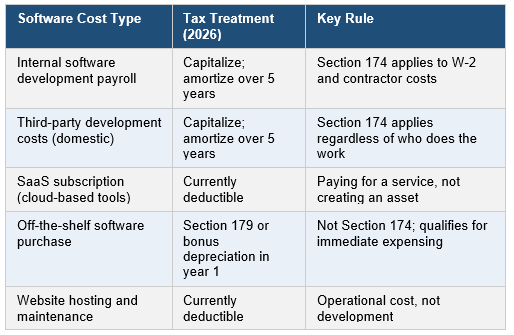
Starting in 2022, Section 174 research and development costs which include most domestic software development costs must be capitalized and amortized over 5 years (15 years for foreign development) rather than expensed as incurred. This change, which Congress has not yet reversed as of 2026, means a company that spent $500,000 developing its e-commerce platform in 2025 deducts only $50,000 per year, not $500,000.
This rule applies to costs incurred in the development or improvement of internal-use software, including both purchased software that is customized and software built entirely in-house. The change from immediate expensing to 5-year amortization has significantly increased effective tax rates for retailers investing heavily in technology.
SaaS subscriptions are treated differently. Monthly or annual payments for cloud-based software services your business uses (Shopify, QuickBooks, a POS platform) are currently deductible as ordinary business expenses. You’re paying for a service, not creating an asset. The 5-year amortization applies to development costs you incur not to software you subscribe to.
Bottom Line: If your business is investing in custom technology development, the Section 174 change is costing you real cash taxes now. Work with your CPA to ensure development costs are classified correctly and to model the multi-year tax impact of your technology roadmap.