



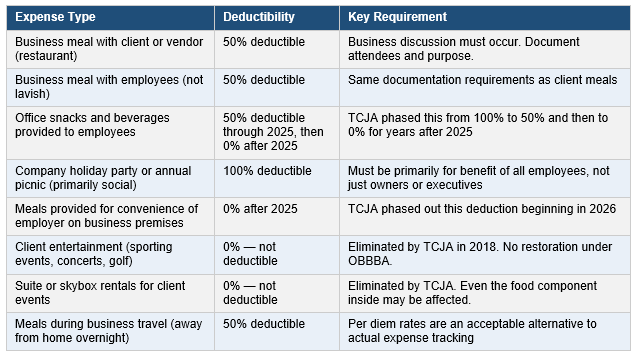
The Tax Cuts and Jobs Act of 2017 eliminated the deduction for most business entertainment expenses effective January 1, 2018. Prior to the TCJA, 50% of the cost of business entertainment, including sporting events, theater tickets, golf, concerts, and similar activities, was deductible when the entertainment was directly related to or associated with the active conduct of business. That deduction is permanently gone under current law. No restoration was included in the One Big Beautiful Bill Act. Retail and CPG operators who continue to host clients, vendors, or employees at entertainment events should understand that those costs are not deductible, regardless of the business purpose of the relationship.
Business meals retain a 50% deduction under current law, provided the meal is ordinary and necessary, the taxpayer or an employee is present, the food and beverages are not lavish or extravagant under the circumstances, and the business purpose and the business relationship of the people attending are documented. The IRS requires specific documentation for meal expenses: the amount, the date, the place, the business purpose, and the names and business relationships of the people present. A credit card statement alone is not sufficient documentation. Receipts showing the actual items ordered, combined with contemporaneous notes about the business purpose and attendees, constitute adequate substantiation.
Chart: Current deductibility guide for meals and entertainment expenditures in retail and CPG businesses.
One of the most common errors in retail and CPG expense reporting is the continuation of entertainment deduction claims after 2017 by businesses whose accounting systems were not updated to reflect the TCJA change. If a retail business is still coding sporting event tickets, golf rounds, or concert tickets to a meals and entertainment account and claiming 50%, those deductions are not permitted and represent an audit risk. The fix is straightforward: reclassify entertainment expenses as non-deductible in the chart of accounts, train the accounts payable function to apply the correct treatment, and review the tax return for any inadvertent entertainment deductions before filing.
Bottom Line: Keep the business meal deduction clean by maintaining proper documentation for every claimed meal. Use a contemporaneous log, a notes app on a phone, or the back of the receipt to record the business purpose and attendees at the time of the meal. Documentation assembled months later rarely satisfies an IRS examiner.