



The Federal Reserve’s 2026 Small Business Credit Survey put a number on something a lot of retail operators already feel: the financing market is tighter and more expensive than it looks from the outside. Among small employer firms that applied for financing in the past 12 months, only 42% received the full amount they sought. Another 36% received partial funding. And 22% received nothing at all.
Retail firms are feeling a specific pressure on top of the general credit tightening. The survey found that 69% of retail businesses reported tariff related cost increases as a financial challenge the highest rate of any sector, higher even than manufacturing at 62%. That is a sector dealing with rising inventory costs at the exact moment that working capital access is constrained. The combination is a cash flow squeeze that is forcing operators to make hard choices between maintaining inventory depth and protecting their bank balance.
The cost of credit picture is also messier than it appears at the point of application. The survey found that 60% of borrowers from online lenders paid more than they expected based on what they were told at origination. Compare that to 37% at small banks and 32% at large banks. The online lending market is faster and more accessible, but the gap between what you are told and what you pay is consistently wider.
Financing Options and What to Watch For
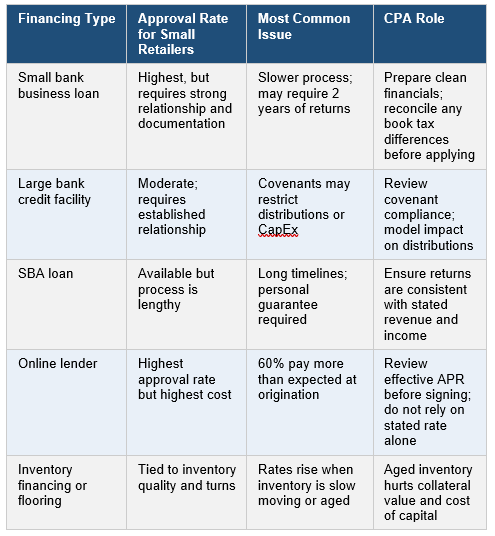
The most practical thing a retail business owner can do before applying for any financing is to make sure their financial statements tell a clear and consistent story. That means reconciling your accounting system, ensuring your tax returns match your reported revenue, and cleaning up anything that looks like a discrepancy between your books and what you are telling a lender. A lender who pulls your tax return and finds income materially different from what you projected is going to reprice the deal or walk away.
Your CPA should be involved before you sign a financing agreement, not after. The interest rate is not the only number that matters. Origination fees, prepayment penalties, personal guarantee requirements, covenant restrictions on distributions and capital spending all of these affect the true cost of the financing and your flexibility to run the business while the loan is outstanding.
Bottom Line: The financing market for small retailers is tighter and more expensive than the headline rates suggest. Know your true cost before you sign, have clean financials before you apply, and get your CPA in the room before you commit to any deal that restricts how you can run your business while you are repaying it.