



Every return filed with the IRS receives a score from the Discriminant Function System (DIF). Returns with high scores those statistically likely to generate additional tax on examination get flagged for human review and potential audit. The IRS has never published the exact weights, but decades of audit experience make the high-risk patterns clear.
For retail and CPG businesses, the highest-risk items are those where the potential for overstatement is greatest and where the IRS has the least third-party verification. Cash-intensive businesses with low reported income relative to industry gross margin norms are consistently high on the audit risk list. So are large vehicle deductions, home office deductions, and meals claimed as business expenses.
The IRS also cross-references information returns. 1099s filed by your vendors, W-2s, and bank interest statements are matched against your return. Unreported income from information returns is one of the most common audit triggers.
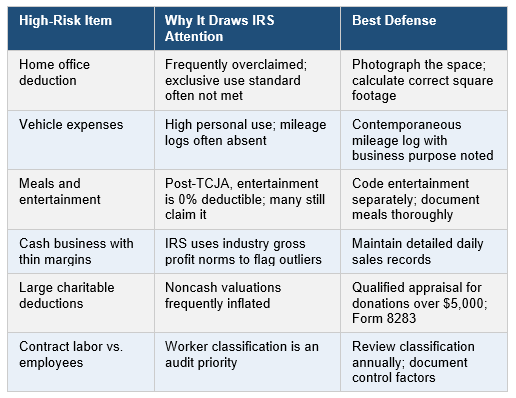
Bottom Line: The best audit defense is a defensible return one where every deduction is documented before it is claimed, not reconstructed afterward. A CPA who asks for receipts and mileage logs before filing is not being difficult. They are keeping you out of the exam unit.