



On August 5, 2026, the IRS issued Notice 2026-28, providing the operational guidance employers need to claim the employer credit for paid family and medical leave under the expanded rules enacted by the One Big Beautiful Bill Act. The credit under Section 45S of the Internal Revenue Code had been a temporary provision prone to expiring and being renewed, a cycle that made it difficult for employers to build benefits programs around it. The OBBBA made it permanent. And Notice 2026-28 introduces a genuinely new and simpler way to calculate it.
The biggest operational change in the guidance is the addition of a premium-based calculation method. Before 2026, employers could only claim the credit based on wages actually paid to employees who were on qualifying leave. That required tracking individual leave instances, calculating each employee’s regular rate of pay, confirming the leave qualified, and maintaining detailed records for every leave event during the year. Starting in 2026, employers who use a qualifying paid family and medical leave insurance policy can instead calculate the credit based on the premiums they pay for that policy, without needing to track individual leave events at all. For businesses that have avoided the credit because the wage method felt too burdensome to administer, the premium method changes the math.
Section 45S paid family and medical leave credit: key parameters, eligibility changes, and how the two calculation methods compare.
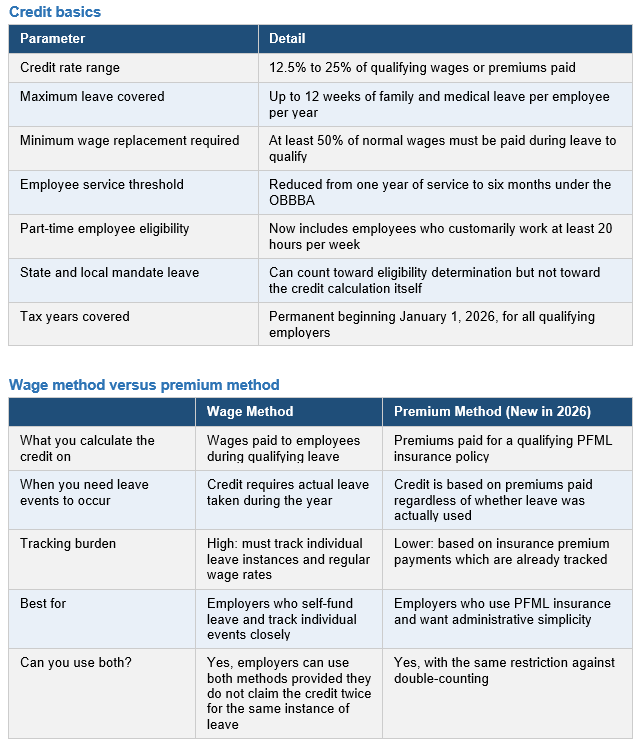
Employers must have a written paid family and medical leave policy that meets specific requirements under Section 45S to claim the credit. The policy must provide at least two weeks of paid leave annually for full-time employees and a pro-rated amount for part-time employees, must pay at least 50% of the employee’s normal wages during leave, and must comply with certain non-interference requirements. Many employers have a leave policy but have not confirmed whether it meets all of these requirements. The first full year that the expanded Section 45S rules are in effect is 2026, which means this is the year to make sure your policy qualifies.
The IRS is accepting public comments on Notice 2026-28 through October 16, 2026, and has indicated that proposed regulations are forthcoming. In the meantime, employers can rely on the guidance in Notice 2026-28 for tax years beginning after December 31, 2025. For retail and CPG businesses that have not yet evaluated whether the Section 45S credit applies to their workforce, this guidance is the right starting point. The credit is a real dollar-for-dollar reduction in your federal tax liability, and it now applies to a broader set of employers and a simpler calculation method than at any point in its history.
Illustrative credit calculation for a retail employer using the premium method with a qualifying PFML insurance policy.

Bottom Line: The paid family and medical leave credit is now permanent, broader, and easier to claim than at any point since it was created. If you have been providing paid leave without claiming the credit, you are leaving money on the table. If you have been avoiding the credit because the wage tracking felt too complex, the premium method may now make it accessible. Have your CPA evaluate whether your current leave policy qualifies and which calculation method produces the better result.