


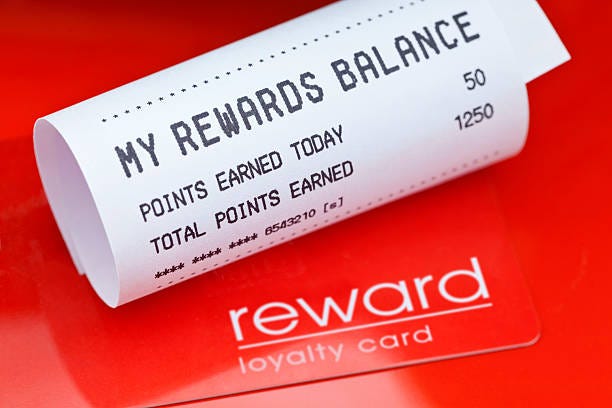
When a customer earns loyalty points at your store, you have created an obligation to deliver future value a discount, a free product, or an equivalent. That obligation is a liability on your balance sheet and a reduction in revenue recognized at the point of sale. Under ASC 606, this deferred revenue treatment is not optional.
The accounting works through a concept called transaction price allocation. When a customer buys $100 of merchandise and earns 100 points worth approximately $1 in future redemption value, the $100 transaction price is allocated between the merchandise ($99) and the points ($1). The $1 for points is deferred until the points are redeemed or expire.
Estimating the breakage rate the percentage of points that will never be redeemed is required under ASC 606. If your historical data shows that 20% of points expire unused, you can recognize 20% of points-related deferred revenue proportionally as customers accumulate points, rather than waiting for expiration. This requires reliable historical data and a documented estimate.
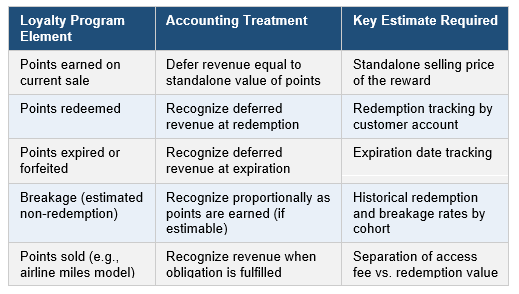
Bottom Line: If you run a loyalty program and are recognizing 100% of revenue at the point of sale without deferring the points component, your revenue and your balance sheet are both misstated. The deferred revenue balance for an active loyalty program can be material and lenders and auditors are increasingly asking about it.