



Retail and CPG businesses regularly accumulate inventory that becomes unsalable due to product expiration, damage in transit or storage, obsolescence from new product introductions, packaging defects, regulatory changes, or simply changing consumer preferences. The tax treatment of this unsalable inventory depends on the accounting method the business uses for inventory. Under the cost method, inventory is carried at cost until it is sold or its value is reduced below cost. Under the lower of cost or net realizable value method, permitted under both GAAP and IRS rules after the adoption of ASU 2015-11, a write-down to a value below cost is recognized when the net realizable value falls below the carrying cost, and the write-down creates a tax deduction.
The IRS requires that inventory write-downs be substantiated by evidence that the value has actually declined below cost in the tax year the deduction is claimed. For expiring food and beverage products, the expiration date itself is generally sufficient evidence. For fashion or seasonal retail inventory, a documented mark-down to a selling price below cost, supported by actual sales data at the reduced price, establishes the write-down. For inventory that is physically damaged or destroyed, photographs, insurance claims, and disposal records are the appropriate documentation. Blanket write-downs based on management estimates without specific supporting evidence are one of the most commonly challenged deductions in retail and CPG audits.
Chart: Inventory write-down documentation requirements by type of obsolescence for retail and CPG operators.
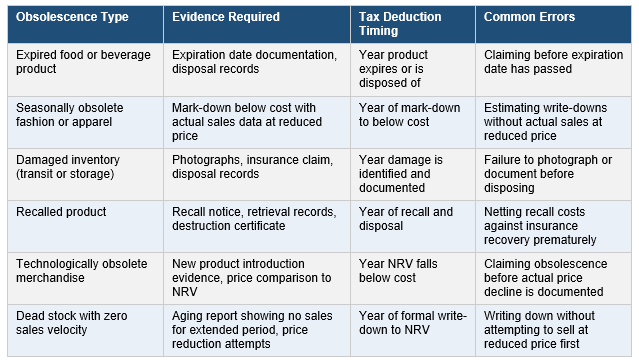
Physical destruction of inventory is the strongest form of documentation for a complete write-off to zero. When inventory is destroyed rather than donated or discounted, the IRS accepts the full original cost as a loss in the year of destruction, provided the destruction is documented with photographs, weight or count records, and a statement from the party performing the destruction. Retail operators who regularly destroy excess or expired inventory should maintain a destruction log that includes the date, product identification, quantity, original cost per unit, and the method and location of destruction. This documentation transforms what would otherwise be a questionable estimate into a fully defensible tax deduction.
Bottom Line: Unsalable inventory represents real economic loss that the tax code permits you to deduct. The key is documentation prepared at the time of the write-down or destruction, not assembled later when an auditor requests it. Build the documentation process into the operational workflow of your inventory management function, not into the annual tax preparation process.