


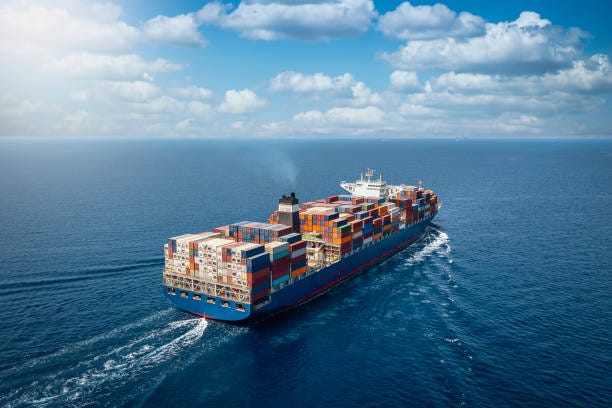
Ocean freight remains one of the most unpredictable cost inputs for retail and CPG companies. While container rates have moderated from the extreme highs experienced during the pandemic period, geopolitical disruptions, port congestion, fuel cost fluctuations, and shifting carrier capacity continue to create meaningful volatility across major trade lanes. Operators who assume that recent stability reflects a new permanent baseline may find themselves exposed.
One of the most consequential decisions finance and supply chain teams face is whether to secure long-term freight contracts or remain exposed to spot market pricing. Contracted rates provide cost predictability and simplify margin forecasting, but they can become a disadvantage if market rates decline during the contract period. Spot pricing can generate savings when markets soften, but it exposes operators to sudden increases during periods of disruption.
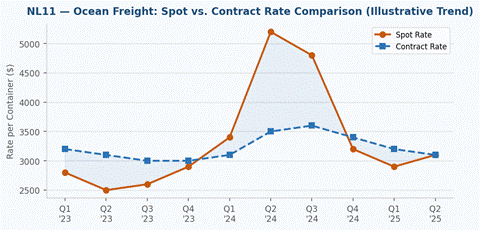
Chart: Illustrative spot vs. contract ocean freight rate trend by quarter, highlighting the divergence during disruption periods.
To illustrate the financial stakes: a retailer importing 500 containers annually may see rates fluctuate between $2,500 and $7,000 per container depending on seasonal demand and market conditions. A $2,000 swing per container translates to a $1 million annual variance in logistics expense — a figure that can materially affect gross margins and EBITDA for a mid-sized operator.
Many larger importers have adopted a hybrid approach: locking in 60% to 80% of expected volume under contract while leaving the remainder exposed to spot pricing for flexibility. Finance teams should also ensure their freight models capture carrier surcharges, detention and demurrage fees, and fuel adjustments, which are often overlooked in initial forecasts but can add meaningfully to landed costs over the course of a year.
Bottom Line: Freight should be managed as a strategic financial variable — not assumed to be a fixed cost that takes care of itself.