



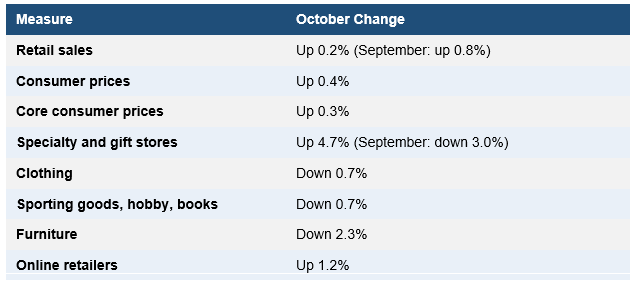
The Census Bureau reported on November 17 that retail sales rose 0.2% in October, down from 0.8% in September. A week earlier, the Bureau of Labor Statistics reported that consumer prices rose 0.4% for the month. When prices rise faster than sales, shoppers are spending more and getting less. In plain terms, unit volume likely shrank in October, right before the biggest selling season of the year.
The details matter more than the headline. Furniture fell 2.3%, clothing fell 0.7%, and sporting goods, hobby, and book stores fell 0.7%. Gas stations rose 1.5% and online retailers rose 1.2%. The one bright spot for independents: miscellaneous store retailers, the Census category closest to gift shops and specialty boutiques, jumped 4.7% after falling 3.0% in September. That looks like early gift shopping and a rebound, not a trend, so don’t build your reorders around it yet.
Underneath, inflation is still running warm. Core prices, which exclude food and energy, rose 0.3% in October. Restaurant prices rose 0.5% and groceries 0.4%, squeezing the same budgets your customers use for gifts. One warning if you read year over year comparisons: the government didn’t collect October 2025 price data during last year’s shutdown, so most 12 month inflation figures for October weren’t published. Be skeptical of anyone quoting a precise annual number.
October 2026 by the Numbers
As a CPA, I’d turn this into three moves. Measure your holiday season in units and gross margin dollars, not just sales, because 4% sales growth on 4% higher prices is zero real growth. Keep December reorders conservative and shift your open to buy toward what’s already proven. And check your own pricing: if your costs went up this year and your prices didn’t, your margin took the hit even if your sales look fine.
Bottom Line: October sales grew slower than prices. The holiday customer is still showing up but buying less per dollar. Plan in units, protect your margin, and keep reorders tight.