


One of the most effective long term wealth building strategies available to retail and CPG business owners is one that most operators discover only after they have already passed on the opportunity for years. The concept is simple: you personally own the building where your business operates, and your business pays you rent.
Here is why this works. Your business already pays occupancy costs. Whether you own or lease, the space costs money. If you are paying rent to a third party landlord, that money leaves your world entirely. If instead you personally own the property and charge your business a market rate rent, the business still gets a deduction, but the rent income flows to you as an individual. With the right structure, that income may carry real estate deductions depreciation, mortgage interest, insurance, repairs, property taxes that reduce or eliminate the tax you owe on it.
There is a specific IRS rule you need to understand called the self rental rule under IRC Section 469. When you rent property to a business in which you materially participate, that rental income is automatically recharacterized as non passive income. That sounds technical, but what it means practically is that you cannot use passive losses from other rental properties to offset the income. The rent you collect from your own business is active income for tax purposes. This is not a dealbreaker, but it is something your CPA needs to plan around.
How the Structure Works
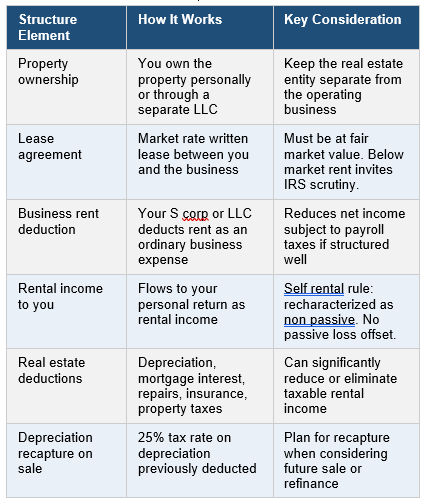
The depreciation advantage is the core of why this works. Commercial real estate depreciates over 39 years under the straight line method. On a $500,000 building, that is approximately $12,800 in annual depreciation deductions that offset your rental income dollar for dollar with no cash outlay. If you also have mortgage interest, insurance, repairs, and property taxes, your effective taxable rental income can be substantially lower than the gross rent your business is paying.
Over time, this structure also builds equity in a separately held real estate asset that the business does not own. When you eventually sell the business, the real estate stays with you personally. The business goodwill and equipment may transfer to a buyer, but the building remains under your control. You can continue operating it as a landlord to the new owner, sell it, or refinance it. That optionality has significant value that operators who lease from third parties do not have.
The setup requires a legitimate, arms length lease at fair market value. Your CPA should document the market rate with comparable lease data in the area. A below market lease looks like an additional benefit flowing to the business, and an above market lease looks like excessive compensation flowing to you. Both create problems. Market rate is the right number and should be reviewed periodically as rents change.
Bottom Line: If you are leasing your store or facility from a third party and that property might be available to buy, the math on owning it and renting it to yourself is worth running right now. The structure reduces your business’s net income, builds personal wealth in a real asset, and keeps the real estate in your hands when the business eventually changes.