



When a retail lease comes up for renewal, most operators sign it. The landlord sends the paperwork, maybe there is a modest rent increase negotiation, and another five years go by. Almost nobody at that moment does the math on what it would cost to own instead. That is a mistake that compounds over time, and the tax math is part of the reason why.
Renting is simple and certain. The monthly payment is fully deductible as a business expense. There is no capital tied up in real estate, no maintenance responsibility beyond what the lease requires, and maximum flexibility to move if the business outgrows the location or the market shifts. For a business in early growth or operating in a market with unstable real estate values, renting is often the right answer.
Ownership changes the equation in several ways. The purchase price of commercial real estate is not immediately deductible. Instead, the building component is depreciated over 39 years. On a $600,000 purchase with $150,000 allocated to land (land is not depreciable), you have $450,000 of depreciable basis generating approximately $11,538 in annual depreciation. That is a real deduction, but it is spread over nearly four decades and it does not match the cash outlay in the year of purchase.
What ownership does provide is an accelerated deduction opportunity through cost segregation. A cost segregation study reclassifies portions of a commercial building from 39 year real property into 5, 7, or 15 year personal property or land improvement categories. Components like specialty lighting, display fixtures, electrical for equipment, flooring, and exterior improvements can often be accelerated. Combined with bonus depreciation, a cost segregation study on a newly purchased retail property can generate significant deductions in the first year or two of ownership that a simple rental payment never could.
Rent vs. Own: Tax and Financial Comparison
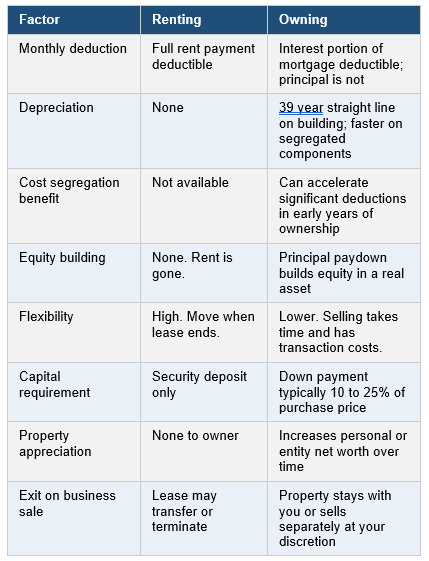
The break even analysis depends heavily on local real estate values, interest rates, and how long you intend to operate in that location. A retailer who is confident they will be in a location for 10 or more years almost always comes out ahead owning versus renting on a total cost basis when the equity appreciation and tax benefits are included. A retailer who might relocate in three to five years may not recover the transaction costs.
One middle ground strategy worth considering: if you cannot or do not want to buy the property yourself, negotiate for tenant improvement allowances and a right of first refusal to purchase in your next lease negotiation. A right of first refusal costs nothing to include and gives you the option to buy if the property comes available during your tenancy. Many landlords will agree to this in exchange for a longer lease commitment.
Bottom Line: The rent versus own decision is not just about monthly cash flow. It is about tax efficiency, wealth building, and what your exit from the business looks like 10 or 20 years from now. Run the numbers with your CPA before you sign the next lease renewal.