



Retail shrink, the reduction in inventory value from shoplifting, employee theft, vendor fraud, and administrative error, is one of the most significant operating costs in the industry. The National Retail Federation consistently reports that shrink averages approximately 1.5% to 2.0% of retail sales across the industry, representing billions of dollars in annual losses. These losses are deductible as theft losses or as adjustments to cost of goods sold, but the method used depends on how the retail operator accounts for inventory and at what point the loss is identified and quantified.
For retailers using the accrual method with periodic physical inventory counts, shrink is most commonly captured through the inventory adjustment that results from comparing the book inventory to the physical count. When the physical count reveals inventory on hand below the book balance, the difference is booked as a shrink loss. This adjustment flows through cost of goods sold on the tax return, making the deduction automatic as long as physical counts are conducted and the book-to-physical variance is properly recorded. The IRS accepts this method because the loss is quantified by an objective measurement rather than estimated.
Chart: Shrink deduction methods by retail accounting approach and documentation requirements.
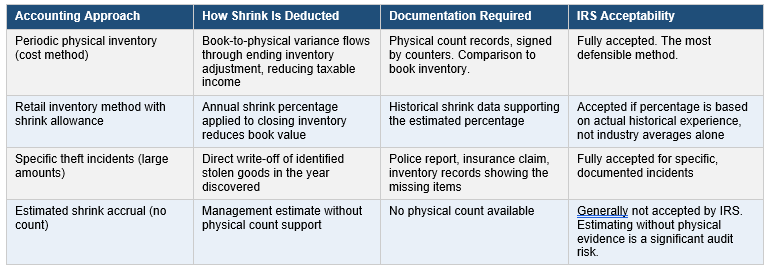
The theft loss rules under IRC Section 165 apply specifically to losses from criminal theft, as distinguished from ordinary inventory loss from damage or obsolescence. A theft loss requires that a crime actually occurred under the law of the state where the theft took place. For retail stores with documented shoplifting incidents, employee theft, or vendor fraud, the specific losses from those incidents may qualify for theft loss treatment, which can be deducted in the year the theft is discovered rather than the year it occurred, if the discovery year is different. For small individual incidents that are absorbed into the general shrink calculation, the distinction between theft loss and inventory adjustment is less important because both are deductible through the cost of goods sold.
Bottom Line: Retail operators that conduct regular physical inventory counts and properly record the book-to-physical variance automatically capture the shrink deduction through the cost of goods sold without any additional effort. The risk is in operators who estimate shrink without counting or who fail to document the counting process. Conduct the counts, document them properly, and the deduction takes care of itself.