


The Disabled Access Credit under IRC Section 44 provides eligible small businesses with a non-refundable tax credit equal to 50% of eligible access expenditures for the year, up to a maximum credit of $5,000 (based on $10,250 in qualifying expenditures). If you spent money making your retail store accessible to customers or employees with disabilities, this credit may apply.
To qualify, you must be an eligible small business: a business with gross receipts of $1 million or less in the prior year, or a business with 30 or fewer full-time employees. Most independent retail stores qualify. The expenditures must be for purposes of enabling the business to comply with the Americans with Disabilities Act of 1990 or similar state laws.
Qualifying expenditures include the cost of removing architectural barriers that prevent access for individuals with disabilities, providing sign language interpreters, providing audio recordings, and making available accessible formats of materials. Physical modifications like ramps, accessible restrooms, automatic door openers, and parking lot redesigns are the most common qualifying costs for retail operators.
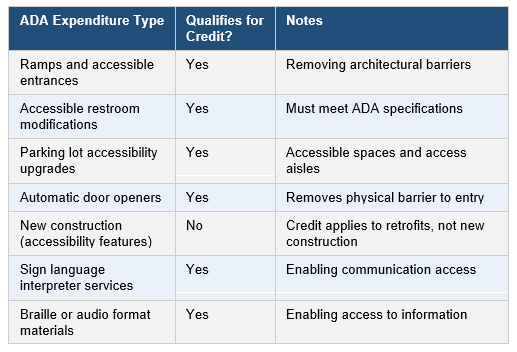
The credit can be combined with a deduction under Section 190, which allows an additional deduction of up to $15,000 per year for barrier removal expenditures. The credit and deduction together can offset a significant portion of the cost of making your retail space accessible.
Bottom Line: ADA compliance is a legal obligation. The Disabled Access Credit makes it a partially subsidized one. If you have spent money in the last several years making your retail space more accessible and have not claimed this credit, ask your CPA whether amended returns are worth filing.