

Stockouts vs. Overstock: The Financial Trade-Offs
Getting inventory wrong in either direction is expensive — but the costs look very different on your P&L.

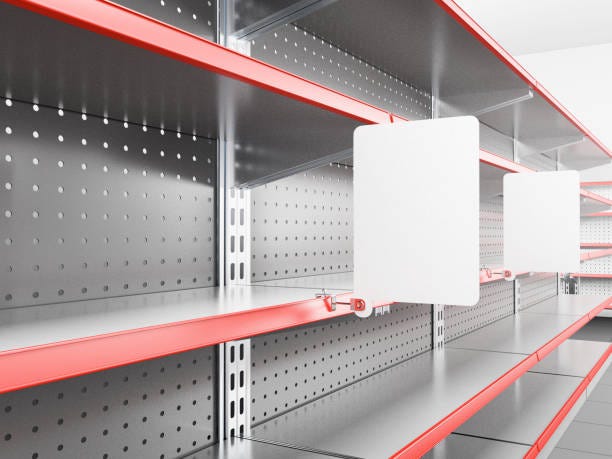
Every retail and CPG business manages a fundamental tension between two inventory risks: holding too much and holding too little. The financial consequences of each are real, significant, and structurally different — which means they require different analytical frameworks and different mitigation strategies. Understanding the true cost of each scenario is prerequisite to making intelligent inventory investment decisions.
Stockouts are the more immediately visible problem. Lost sales, empty shelves, and disappointed customers generate direct revenue loss and can damage retailer relationships and consumer loyalty in ways that persist beyond the stockout event itself. Retailers may penalize vendors for out-of-stock conditions through chargebacks, reduced future orders, or loss of shelf placement. In e-commerce, a stockout often means a customer goes directly to a competitor — and may not return.
Overstock carries a different but equally damaging financial profile. Excess inventory ties up working capital, inflates storage costs, and almost always requires discounting to clear — compressing margins in ways that can erase multiple quarters of otherwise healthy gross profit. The markdown cycle is also rarely a one-time event; businesses that consistently overbuy develop a pattern of promotional dependency that trains customers to wait for sales and undermines full-price sell-through over time.
The optimal inventory strategy is not to minimize one risk at the expense of the other — it is to build a planning process that explicitly models and prices both risks, sets service level targets that reflect their relative costs, and positions safety stock at the level where the marginal cost of one more unit of inventory equals the marginal benefit of the service level improvement it enables. Finance and supply chain teams that jointly own this framework make systematically better inventory decisions than those operating in separate silos.
Bottom Line: Stockouts and overstock both cost money — but they show up differently. Know the true cost of each before deciding how much safety stock your business actually needs.