


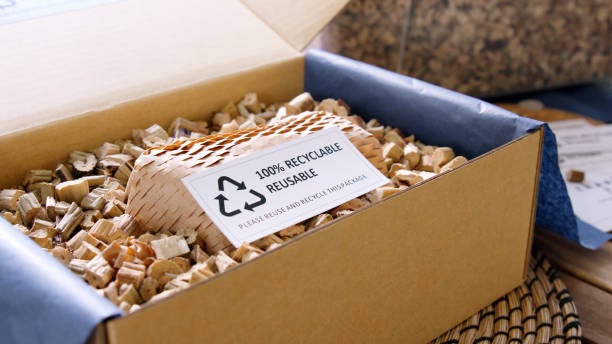
Sustainable packaging has moved from a brand positioning choice to an emerging operational and compliance requirement. Pressure from major retail partners, evolving state and international regulations, and increasing consumer scrutiny are collectively accelerating the timeline for brands to address packaging sustainability — often faster than many operators have planned for.
The near-term financial reality is that eco-friendly materials — including recycled plastics, compostable packaging formats, and alternative fiber solutions — typically carry higher production costs than conventional materials. Depending on material availability, manufacturing complexity, and order volume, brands transitioning to sustainable packaging may experience unit cost increases of 10% to 20% on affected SKUs.

Chart: Sustainable vs. conventional packaging cost index by material type, showing the premium by category.
The longer-term financial risk of inaction may be greater, however. Major retail partners have established supplier sustainability commitments with defined timelines, and failure to meet those requirements can result in reduced distribution or loss of retail placement. Brands that delay investment in sustainable packaging may also face accelerating compliance costs as extended producer responsibility (EPR) programs expand across U.S. states and international markets.
Finance teams should build a comprehensive cost model for each packaging transition, including material cost increases, tooling and redesign costs, any supply chain modifications required, and the timeline to potential cost recovery. Monitoring the regulatory landscape is also essential, as several states have enacted or are considering EPR legislation that would require brands to contribute financially to packaging waste management systems.
Bottom Line: Sustainable packaging is transitioning from a marketing initiative to a financial and operational necessity. Planning ahead reduces the cost significantly.