



Forty three percent of CPG companies are reporting gross margin compression of 1 to 5 points from 2025 tariff impacts. That average masks a wide range across different products within the same brand. A can of tomatoes is being hit by 15 to 20% aluminum tariff cost increases. A pouch of the same product might be seeing only 2 to 3% cost increases because polypropylene packaging is less exposed to the current tariff structure. If you are managing your tariff exposure at the portfolio level and not the SKU level, you are making pricing and sourcing decisions on bad data.
The effective China tariff rate as of 2026 is approximately 37.5%, combining a 12.5% forced labor tariff and a 25% Section 301 surcharge, down from a prior peak of 45% after the Supreme Court invalidated IEEPA tariffs in February 2026. The $800 de minimis exemption for Chinese goods was eliminated on May 2, 2025, which means every shipment from China now incurs full tariff charges regardless of value. If any part of your supply chain relies on smaller direct to warehouse shipments from Chinese manufacturers, your cost model needs to reflect full tariff exposure on every shipment.
The pass through math is brutal in price sensitive categories. Research suggests that every 5% price increase triggers 8 to 12% volume decline in categories where consumers have alternatives. For a CPG brand competing against store brands and value tier national brands, a price increase large enough to fully pass through the tariff cost may lose more volume than the margin it protects. The SKU level analysis forces you to make that trade off deliberately by product, not by instinct across the whole line.
SKU Level Tariff Triage Framework
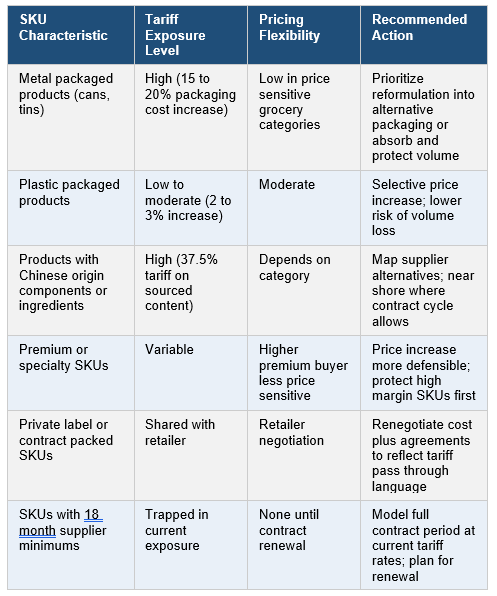
The 18 month supplier contract lock is one of the most underappreciated constraints in the current tariff environment. Brands that want to diversify away from tariff exposed suppliers cannot do so immediately if they are contractually committed. The planning response is to run your SKU level exposure analysis now, identify which SKUs will still be in tariff exposed supply chains at renewal, and begin the sourcing diversification conversation before those contracts come up rather than scrambling when they do.
Bottom Line: Tariff management is not a one time adjustment to your cost model. It is an ongoing SKU level discipline. Build the exposure map for your current product line, identify the high exposure SKUs where packaging or sourcing alternatives exist, and start those conversations now while you have enough lead time to make changes before the next round of cost pressure arrives.