


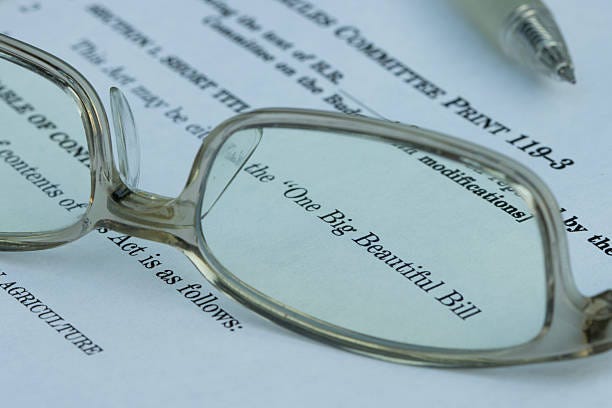
The One Big Beautiful Bill Act made two tax rates permanent that had been subject to ongoing uncertainty: the 21% corporate tax rate for C-corporations and the 20% qualified business income deduction for pass-through entities. Before the OBBBA, both could theoretically have reverted to prior law depending on future legislation, which made it genuinely difficult to make durable structural decisions. That uncertainty is gone. The rates are set, the planning baseline is stable, and the question of which business structure makes the most financial sense for your specific situation is now worth answering with confidence.
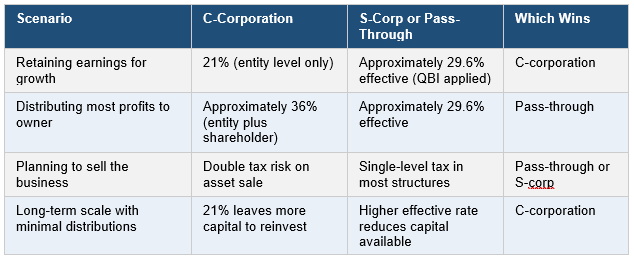
The core trade-off is straightforward. A C-corporation pays 21% on retained earnings and additional tax when those earnings are eventually distributed to shareholders, creating a combined rate of approximately 36% on distributed profits. An S-corporation or partnership flows all income to the owner’s individual return in the year it is earned, but the permanent 20% QBI deduction brings the effective rate on that income down to approximately 29.6% for most owners. The C-corporation wins when you intend to retain and reinvest earnings, because 21% leaves more capital available for growth than the pass-through effective rate does. The pass-through wins when you plan to distribute most of your profits, because 29.6% is better than 36%. And the pass-through usually wins if you plan to sell the business, because a C-corporation asset sale creates double taxation that an S-corporation or partnership sale avoids.
Effective federal rate comparison by entity type for retail and CPG business owners, incorporating OBBBA permanent rates.
The right answer for your business depends on your specific income level, distribution strategy, growth timeline, and exit plan. None of those factors were stable enough to build a durable structure around until now. With both the 21% rate and the QBI deduction made permanent, you have the stable baseline needed to model this correctly. If your structure was set up under different assumptions and you have not revisited it since the OBBBA was enacted, that conversation with your CPA is worth having before the end of the year.
Bottom Line: Permanent rate certainty is the best planning environment you are going to get. Use it. Review your entity structure now, run the multi-year model with your CPA, and make the decision from a position of clarity rather than waiting for the rules to change again.