



The Offer in Compromise (OIC) allows qualifying taxpayers to settle their IRS tax debt for less than the full amount owed. It is real, it is available to businesses and individuals, and it is also widely misrepresented by tax resolution firms who promise outcomes they cannot deliver. Understanding how the IRS actually evaluates an OIC is the starting point.
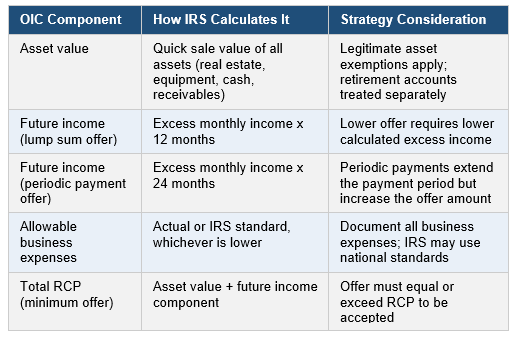
The IRS accepts an OIC when the offered amount represents the most it can reasonably expect to collect from the taxpayer. This is called the Reasonable Collection Potential (RCP). The RCP equals the net realizable value of your assets plus the present value of your future income available for collection after allowable living or business expenses, projected over either 12 or 24 months depending on whether you propose a lump sum or periodic payment.
For a retail or CPG business, the RCP calculation typically includes the liquidation value of business assets, equity in real property, and a multiple of excess monthly business income after allowable expenses. If your business is genuinely unprofitable, your RCP may be low. If you have significant real estate equity or business assets, the IRS will count those even if you are cash-poor.
The OIC process takes 6 to 18 months and requires current filing compliance, no open bankruptcy, and payment of a non-refundable application fee. While the OIC is pending, collection is generally suspended. If rejected, the taxpayer can appeal within 30 days.
Bottom Line: The Offer in Compromise is not a discount program for people who can pay but choose not to. It is for taxpayers who genuinely cannot pay the full balance. If your business has real assets and income, the IRS will find them. Work with an experienced CPA or tax attorney to calculate your RCP before filing an offer.