



Every dollar loaded onto a gift card that is never redeemed is income to your business eventually. The question is when you recognize it and whether you ever have to hand it over to the state instead. Federal tax law and state escheatment law often pull in opposite directions on this question.
For federal income tax purposes, gift card breakage is income. The timing depends on your facts and accounting method. The IRS has generally allowed retailers to defer breakage income recognition until the probability of redemption becomes remote typically after 12 to 24 months of inactivity depending on your historical redemption pattern.
State unclaimed property (escheatment) laws complicate this. Most states require that unredeemed gift card balances be remitted to the state after a dormancy period typically 2 to 5 years. Once remitted to the state, you generally cannot recognize the income; you’ve already surrendered the cash.
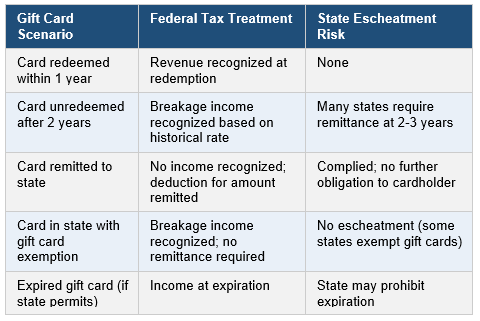
If you sell gift cards in multiple states, each state’s dormancy period and exemption rules apply to cards purchased by residents of that state. Multi-state gift card programs need an annual unclaimed property review not just an accounting policy.
Bottom Line: Gift card breakage is income, but when you report it and whether the state gets the money first depends on your state-by-state unclaimed property obligations. Review your gift card liability balance annually and coordinate your accounting policy with your unclaimed property compliance obligations.