



The most common structure for a retail operator who also owns their building is to hold the real estate in one entity typically an LLC and operate the business in a separate entity that leases from the real estate LLC. This is not aggressive tax planning. It is standard asset protection practice.
The operating entity faces the most liability exposure such as slip-and-fall claims, employee lawsuits, product liability, vendor disputes. If the real estate and the business are in the same entity, a judgment against the business can reach the building. Separating them puts a legal wall between the operations and the real estate.
The self-rental rules under Section 469 prevent the landlord-owner from generating passive losses on the rental arrangement when both entities are materially participated in. But the rental income received by the real estate LLC is not subject to self-employment tax, which is a real dollar savings on the margin a sole proprietor would otherwise face.
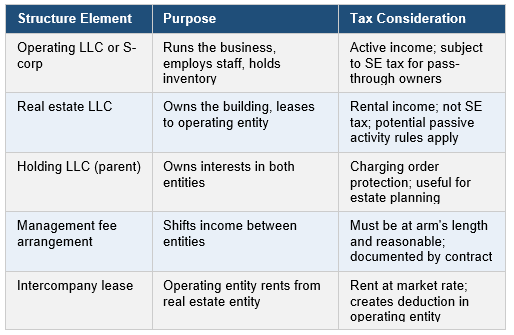
For estate planning, the holding company structure also facilitates gifts of membership interests to family members at a potential valuation discount, since minority interests in a closely held LLC lack marketability and control.
Bottom Line: Separating your operations from your real estate is one of the most straightforward liability protection moves available to a retail owner. The tax advantages are real but secondary. The primary benefit is that a judgment against your store cannot reach the building.