


A cybersecurity breach at a retail or CPG business generates costs across several categories: forensic investigation, notification to affected customers, credit monitoring services, legal fees, regulatory response, and system remediation. The tax treatment depends on which category each cost falls into.
Breach response costs forensic investigation, legal fees to manage the response, customer notification, and credit monitoring are generally currently deductible as ordinary and necessary business expenses under Section 162. These are the costs of managing an existing problem, not creating a new asset.
System remediation and security upgrades are more nuanced. Costs to restore a system to its pre-breach condition are deductible as repair and maintenance expenses. Costs that materially upgrade or improve the system beyond its original condition must be capitalized and depreciated though in many cases, software costs for internal-use systems have their own set of rules under ASC 350-40 and the related tax regulations.
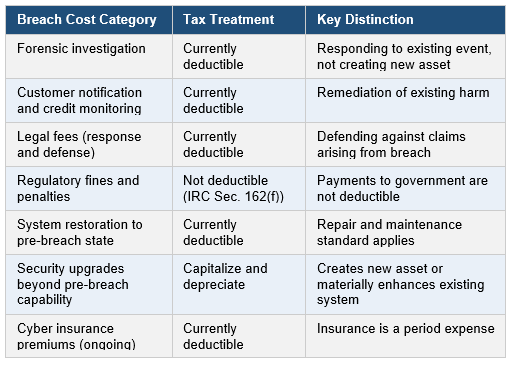
Bottom Line: Document every dollar spent in response to a breach as it occurs by category. Regulatory fines are not deductible; most other breach response costs are. The tax deduction does not make a breach less painful, but getting the deductions right helps limit the financial damage.