


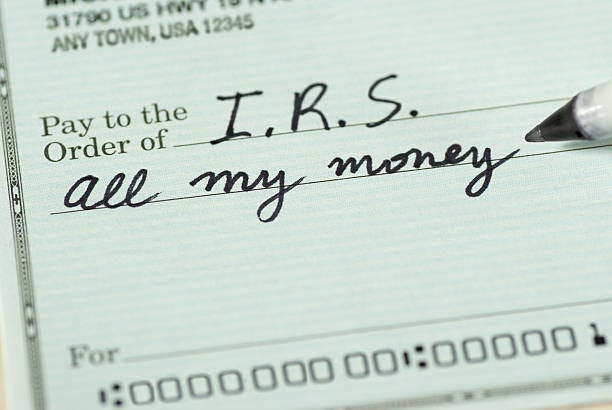
Owing the IRS more than you can pay is not the same as having no options. The IRS has several collection alternatives that allow taxpayers to resolve their balance while keeping the business operating. The right choice depends on how much you owe, what you can afford, and whether the underlying tax liability is correct.
A streamlined installment agreement is available for businesses owing under $25,000 and individuals owing under $50,000. It requires no financial disclosure, can be set up online or by phone, and allows up to 72 months to pay. Interest and failure-to-pay penalties continue to accrue during the agreement, but the penalty rate drops from 0.5% to 0.25% per month while the agreement is in effect.
For larger balances, a standard installment agreement requires a Collection Information Statement (Form 433-B for businesses). The IRS evaluates your income, expenses, and assets to determine what you can afford. If your allowable expenses exceed your income, you may qualify for Currently Not Collectible (CNC) status, which suspends collection activity but does not stop interest from accruing.
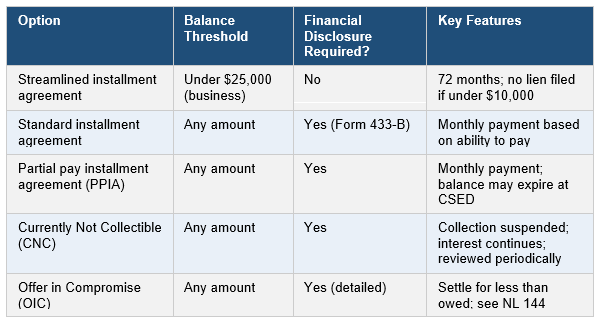
Every installment agreement, while it protects you from levy, allows the IRS to file a Notice of Federal Tax Lien. This lien attaches to all assets and can affect credit, real estate transactions, and business financing. Understanding the lien implications before entering an agreement is important.
Bottom Line: If your business owes the IRS, the worst thing you can do is ignore it. The IRS will levy bank accounts and receivables without much warning once the collection process advances. Contact a CPA or tax attorney as soon as the balance appears your options are best before a levy action begins.