



Retail sales were up 3.3% year over year in March 2026. That sounds healthy until you look underneath the number. Easter calendar shifts inflated the comparison. And the research firm Circana, which tracks actual consumer purchase behavior across mass retail categories, is describing a pattern that the top line number obscures: consumer spending is splitting in ways that should be making your Q4 inventory plan more conservative, not more aggressive.
The pattern that is emerging goes beyond the K shaped recovery narrative that described pandemic era spending. Circana is now calling it a ‘dipping E’ lower income households under strain at the bottom, upper income growth visibly slowing since late 2025, and middle income consumers who are newly cutting discretionary spending in the middle. The three rungs of the income ladder are all moving toward caution, just at different speeds.
The data point that should sit with every retail buyer and merchandise planner is this one: four in ten Americans now demonstrate structurally deal driven or cost conscious purchasing behavior, and 69% of retail executives believe this is a permanent shift, not a temporary inflation response. Customers who trained themselves to wait for a sale, compare prices online before buying, or buy only what is on their list are not going back to impulse buying at full price.
How the Spending Shift Translates to Inventory Risk
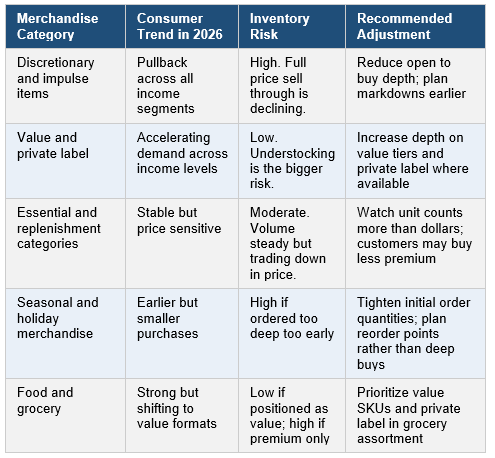
The financial implication of getting Q4 wrong is not just a missed sales number. It is a markdown liability. Every unit you buy for Q4 that does not sell at full price before January gets marked down, and that markdown is a margin event that flows directly into your P&L. In a tight margin retail environment, a 10 point markdown on 15% of your Q4 buy is enough to offset a meaningful portion of what looked like a good sales month.
The retailers Deloitte surveyed are responding in two ways: 73% are planning gradual price increases, and 72% are shifting their product mix toward higher margin items. Those two strategies work together in an environment where volume may be under pressure if you are going to sell fewer units, you want the units you do sell to carry more margin. That is a merchandise planning and buying decision, not just a pricing decision.
Bottom Line: Q4 inventory commitments made right now should reflect the reality that consumer demand is softer and more value driven than the top line retail sales numbers suggest. Tighten your open to buy, favor value over depth, and build your markdown plan before you need it rather than after. The financial protection from a conservative inventory plan in a cautious consumer environment is worth more than the upside from a deep buy if the market surprises on the downside.