



Shrink is one of the most painful line items in retail. Shoplifting, employee theft, vendor fraud, administrative errors, damaged goods the National Retail Federation consistently puts industry shrink above 1.5% of sales. For a store doing $2 million in annual revenue, that is $30,000 or more walking out the door every year. Most operators treat it as an operational frustration. Not enough treat it as a tax event.
The IRS allows retailers to deduct inventory losses, but the method and timing depend on how you account for inventory. Under the cost of goods sold method, which most retailers use, shrink gets captured when your ending inventory count reflects the missing goods. If your books show 1,000 units on hand but your physical count finds 940, the cost of those 60 missing units flows through COGS and reduces taxable income automatically as long as you actually do a physical count and record the result.
That last part is where most small retailers leave money on the table. If you are estimating ending inventory rather than counting it, your shrink deduction is probably understated. The IRS does not require a specific counting frequency, but the more accurate your physical counts, the more precisely your real losses are reflected in your tax return.
For losses that go beyond normal shrink a break in, a fire, a catastrophic spoilage event, a vendor who disappeared with a payment there is a separate provision. Casualty and theft losses for business property are deductible under IRC Section 165 in the year the loss is discovered, reduced by any insurance reimbursement received. You need documentation: a police report for theft, an insurance claim, photos of damage. The deduction is the adjusted basis of the lost property, not the retail selling price.
How Shrink Shows Up in Your Tax Return
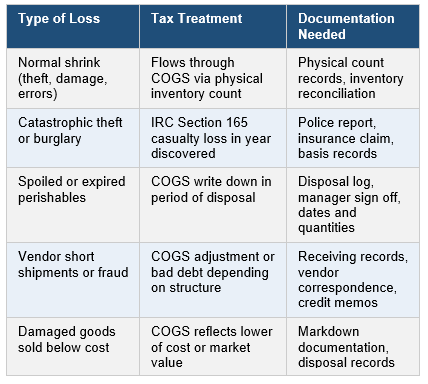
One area CPAs frequently find undertaxed: retailers who carry perishables or seasonal merchandise and dispose of unsold goods at end of season without documenting the disposal. If you throw away expired product, donate overstock, or destroy damaged merchandise, that event needs to be recorded with a date, quantity, and cost basis to support the deduction. A verbal recollection to your CPA in April does not hold up in an audit.
For CPG brands, shrink extends into the distribution chain. Product damaged in transit, returned by retailers, or destroyed at a co packer is a cost of goods event that needs to be tracked back to cost basis. Returns from retail partners that arrive unsaleable are a real inventory loss, and the documentation requirements are the same.
Bottom Line: Shrink costs you money twice if you do not document it once when the merchandise disappears and again when you miss the deduction. Implement a physical count process, keep disposal logs, and make sure your CPA knows the full picture of what was lost during the year, not just what the books show.